Saturday, October 23, 2010

Nine people stabbed at Philippines school, three dead

An ex-convict stabbed nine people at a Philippines elementary school

An ex-convict stabbed nine people at a Philippines elementary school on Friday in the south of the country, killing three, before parents wrestled away his knife and stabbed him to death with it, police said. The man killed a teacher, a fifth-grader and an elderly man who was among those who tried to grab the attacker's knife, police Superintendent Hado Edding said. The man first barged into a room at the Talisayan Elementary School in Zamboanga City and fatally stabbed the teacher, the police official added. He then went to another room, forced fifth grade students into a restroom and stabbed them one by one until the adults were able to stop him. Four students and two teachers were being treated at Zamboanga's Brent Hospital, including an 11-year-old girl and one teacher in a serious condition, according to a doctor at the hospital

Police said the attacker was Fely Mateo, who had served a prison sentence for murder. Medical officials could be seen placing Mateo's dead body onto a stretcher. Police described Mateo as mentally disturbed but it wasn't clear what prompted the attack. One of the students, who was forced into the restroom, said Mateo threatened to kill everyone inside the school if police did not let him go. "There was a man who went on top of the restroom he kicked the ex-convict out of the room so we were able to escape, a lot of people attacked the offender that is why we were able to survive," said Liza, a student at the elementary school.

Typhoon Megi triggers deadly Taiwan landslides


Multiple landslides hit a coastal highway in Taiwan, stranding cars and buses
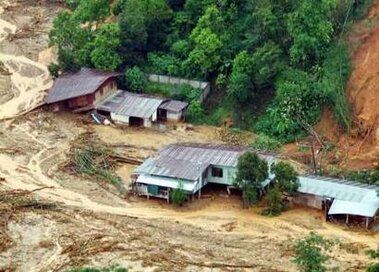
A tourist bus was feared buried and three people were killed in multiple landslides as Typhoon Megi brought torrential rain to Taiwan. A torrent of mud struck a Buddhist temple in Suao, killing three people and leaving six more missing. Teams are also searching for a Chinese tourist bus feared buried when landslides struck a coastal highway, causing it to partially collapse. The landslides stranded 400 drivers; half have now been taken to safety. Typhoon Megi caused havoc in the Philippines, killing at least 26 people and causing extensive damage to houses in some regions. 

The storm is now heading for south China's Fujian province, where flights have been cancelled, fishing vessels recalled to port and more than 100,000 people evacuated from low-lying areas. In Taiwan, Megi brought 45 inches (114 cm) of rain to Ilan county in the northeast over a 48-hour period. In Suao city, rescue teams dug through mud at the White Cloud Buddhist temple in search of six people believed to be trapped. A search was also under way for a bus carrying 19 Chinese tourists. It was known to have been travelling along a highway in Ilan that was hit by multiple landslides, causing a 500m section to collapse. Air force helicopters were searching for the bus, while other teams were helping to evacuate drivers and passengers in other vehicles stranded on the highway by the rockfalls. 


Officials: Toll in Haiti's cholera outbreak now above 150

Deadly cholera outbreak in Haiti

The death toll from a cholera outbreak in Haiti has risen to more than 150 confirmed deaths, according to health officials with the U.S. Centers for Disease Control and the U.S. Agency for International Development. At a joint news conference held Friday, Dr. Rob Quick and Dr. Carleene Dei discussed the outbreak and efforts to work out a containment strategy. The CDC will send an 11-member team to Haiti over the next few days to find out which antibiotics will be most effective in treating the cholera outbreak. US AID will provide supplies needed to set up treatment centers. The group has already prepositioned 300,000 oral re-hydration kits and are distributing water purification kits in affected areas. Officials also confirmed that all the reported cases are in the Artibonite and Central Plateau regions, north of Port-au-Prince. They said they're working to contain the outbreak there and prevent its spread to the densely populated capital.

Chaos reigned acrooss the Artibonite and Central Plateau regions Friday, as hospitals overflowed with people rushing to get help from the fast-moving cholera outbreak. Eric Lotz, Haiti's national director for the nonprofit Operation Blessing, described a "horrific" scene outside St. Nicolas hospital, the main medical facility in the city of St. Marc, as patients and their family members fought to get care. "There was bedlam outside the gate," said Lotz. "Inside (the hospital), every square inch is covered with people." Some people waited 24 hours or more to get help outside the hospital, many of them on stretchers, said Terry Snow, Haiti director for the nonprofit Youth With a Mission. Snow said he tried to take one man with cholera to various clinics, only to end up at St. Nicolas hospital and be told that it was full. The man died soon thereafter in the back of his truck, he said. "It's very chaotic," Snow said of the scene in St. Marc and more rural agricultural areas nearby. "People are trying to figure out what to do. People are lost." Sandrellie Seraphin, who works for Partners in Health and the Clinton Foundation, visited the hospital Wednesday. "It's terrible," she told CNN by phone, describing the crowds of people trying to get help. "There's a great fear among the people" about the disease.

1,526 people have been sickened in the outbreak, said Imogen Wall, the U.N. humanitarian spokeswoman in Haiti. This comes after recent heavy rains caused the banks of the Artibonite River to overflow and flood the area. Dammed in 1956 to create Lac de Peligre, the Artibonite River is Haiti's dominant drainage system, according to the U.S. Library of Congress. Snow said that "constant miscommunication and confusion" have hindered aid efforts, though he expressed hope things may improve Friday as more help comes in. On Friday, Haitian Prime Minister Jean-Max Bellerive called the cholera outbreak "unprecedented" and said authorities were working with the Centers for Disease Control and Prevention to understand what happened. "We have to determine ... where (the cholera) came from," he said. Cholera is caused by a bacterial infection of the intestine and, in severe cases, is characterized by diarrhea, vomiting and leg cramps, according to the U.S.-based Centers for Disease Control and Prevention. In such cases, rapid loss of body fluids can lead to dehydration and shock. "Without treatment, death can occur within hours," the agency says.

A person can get cholera by drinking water or eating food contaminated with the bacteria. During epidemics, the source of the contamination is often the feces of an infected person, and infections can spread rapidly in areas where there is poor sewage treatment and a lack of clean drinking water, according to the CDC. "If the environmental conditions are not right, anybody who ingests that food or water can get ill," said Dr. William Schaffner, a professor of preventive medicine at Vanderbilt University in Nashville, Tennessee. "This is the disease that can cause more severe dehydration than any other." All the reported cases in the Lower Artibonite involve severe diarrhea and vomiting, Wall said. Ian Rawson, director of Hopital Albert Schweitzer Haiti near Verrettes, said patients began showing cholera-like symptoms Saturday. The pace picked up significantly Tuesday and beyond, though he said the situation was under control Friday at his 80-bed facility about 16 miles east of Saint Marc. "So far, we've been able to manage it," Rawson said, noting that new patients were now coming in via pick-up trucks about every 10 minutes. Temperatures in the mid-90s exacerbated the dual concerns about dehydration and people contracting cholera by drinking tainted water. People lined roadsides in and around villages with buckets, according to Lotz, hoping that passerby might have clean water.

He said that his organization on Thursday helped install one water filtration unit, capable of providing 10,000 gallons of clean drinking water, and planned to install another two Friday. But some parts of the impoverished nation remained out of reach, he said. One village had been totally cut off by floodwater. Operation Blessing was among many nonprofit organizations, nations and international bodies in the region offering help. In a State Department briefing Friday, spokesman P.J. Crowley said members of several U.S. agencies were "on the ground" to facilitate and provide clean water and ensure sound sanitization. U.N. staff, too, have sent tents and rehydration supplies to the region, Wall said. Haiti is still trying to bounce back from a catastrophic 7.0-magnitude earthquake on January 12 that destroyed much of the capital city. The U.N. mission in Haiti credited access to clean water and free medical facilities for preventing feared outbreaks of cholera and tuberculosis. But Snow said he has noticed a rise in new illnesses -- from skin infections to flu-like viruses -- in the region since tens of thousands of people moved to the area after the earthquake and the opening of a new canal off the Artibonite River. Whatever the cause, Lotz said the scene this week at hospitals in and around St. Marc eerily resembled what happened in Port-au-Prince after the colossal quake. "It's the same scene, without the wounds, just the same numbers of people inundating the hospital," said Lotz, who was in the Haitian capital last January.


Friday, October 22, 2010

Dozens dead in Haiti from suspected cholera outbreak

Hundreds of people received treatment in the car park of a hospital in Saint-Marc

A suspected outbreak of cholera has killed at least 135 people in central Haiti, officials have said. The director-general of the health department, Dr Gabriel Thimote, said he was awaiting laboratory test results to confirm cholera was the cause. The victims suffered diarrhoea, acute fever and vomiting. More than 1,500 people were infected, officials said. The outbreak is centred in the Artibonite and Central Plateau regions, north of the capital Port-au-Prince. Cholera is an intestinal infection caused by a bacteria transmitted through contaminated water or food. The source of contamination is usually the faeces of infected people. It causes diarrhoea and vomiting leading to severe dehydration, and can kill quickly if left untreated. It is easily treated though rehydration and antibiotics, however.Dr Thimote told the Reuters news agency that of the 15 specimens so far tested, 13 led him to believe there was a cholera outbreak.

Health Minister Alex Larsen also said he believed it was cholera. Dr Thimote said the worst-affected areas were Douin, Marchand Dessalines and areas around Saint-Marc, about 100km (60 miles) north of Port-au-Prince. Local hospitals were "overwhelmed", and a number of people were being evacuated to clinics in other areas, he added. At one point on Thursday, hundreds of people lay in the car park of St Nicholas hospital in Saint-Marc, with intravenous drips in their arms to treat dehydration, until it began to rain and they were rushed inside. Some patients said they drank water from a public canal, while others said they bought purified water. "I ran to the bathroom four times last night vomiting," 70-year-old Belismene Jean Baptiste told the Associated Press.


The Pan American Health Organization (Paho) had sent two teams to the south of Artibonite, near Saint-Marc, a doctor with Paho told the BBC. Pending the final test results, officials from Paho and the UN Office for the Co-ordination of Humanitarian Affairs (OCHA) attributed the deaths to "acute diarrhoea". They said they were concerned by the severity of the outbreak and the high number of reported deaths. "Nothing can be verified at the moment. We have no numbers, no epidemiological data," said Dr Michel Thieren of Paho. The symptoms could be associated with a number of diseases, he added. The victims range in age, but the young and the elderly appear to be the most affected. There were fears of a cholera outbreak in the aftermath of January's devastating earthquake, which killed some 250,000 people and left 1.5 million homeless. Many people are still living in makeshift camps with unsanitary conditions and little access to clean drinking water, but there were no outbreaks, according to the World Health Organization (WHO). The Artibonite department was not badly damaged in the earthquake but thousands of people who lost their homes have moved into camps or are living with relatives there. "We have been afraid of this since the earthquake," said Robin Mahfood, president of Food for the Poor, which was preparing to airlift donations of antibiotics, oral dehydration salts and other supplies.

Three California hikers found, but two more missing

3 hikers rescued on Mount Whitney; 2 others missing

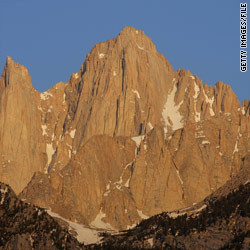
Three experienced hikers were rescued from California's Mount Whitney, but a father and son in a separate group are missing, the National Park Service said.  Battling heavy snow, rescue personnel and a California National Guard helicopter reached the three men around noon (3 p.m. ET) Thursday. The men were part of a group of 10 hikers who set out on their journey up the mountain on Monday. About 45 people looked for the three hikers -- Phillip Michael Abraham, 34; Dale Clymens, 45, and Stevan James Filips, 45 -- the National Park Service said in a statement. All three were able to walk and move during a general health assessment. Two other hikers on a 36-mile cross-country loop were supposed to return Tuesday. They are Sinh Baghsohi, 27, and his father, whose first name is unknown, park officials said. Both men are originally from Iran, but their current residences are not known. The younger Baghsohi is 6 feet, 5 inches tall and weighs about 287 pounds. His father is 6 feet tall and weighs 180 pounds.

They had hiked in with a friend, who became ill and hiked out, the park service said. Dave Paladino, an Omaha, Nebraska, resident and leader of the larger group, said extreme weather dumped up to three feet of snow and drastically lowered visibility in Sequoia and Kings Canyon national parks. The group of 10 hikers shared a love of climbing, outdoor activities and adventure, Paladino said. They set out on their hike shortly after 4 a.m. Monday in several sub-groups, including one led by Paladino and another including all three missing hikers. "Every single one had been training for this event for years," said Paladino. The snow began for Paladino's group when they reached 10,000 feet up what he called the "10-mile hill," and picked up significantly as they went up another 2,000 feet. His group reached the summit around 3:30 p.m. Monday, staying briefly at a shelter there before going back down the mountain. The climb back down was much more difficult than expected, according to Paladino, due to the heavy snow. "It was by far the hardest thing we've ever done," said Paladino, who said he has climbed Mount Rainier in Washington state, among other peaks.

At one point, his group met and talked briefly with the climbers who later went missing. Abraham later sent several texts, the last of which was between 4 a.m. and 6 a.m. Tuesday in which they said they couldn't find the trail because of the snow and were heading to the summit shelter. The three climbers did not have snow shoes, said Paladino. However, they likely had enough food and water to last several days, he said. Temperatures near the mountain's peak were in the 20s, Paladino added, not low enough to make frostbite a major concern. A rescue operation involving two hikers was begun and aborted Wednesday because of the snow. On Thursday morning, "bigger and more experienced teams" were brought in, said Paladino. "We wanted to do this," said Paladino. "These guys were doing what they loved, and we'll continue to do what we love."

Thailand hit by worst flood in decades

Thailand  have left 17 people dead over the past two weeks

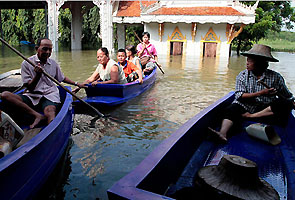
Devastating floods spreading from northeastern Thailand  have left 17 people dead over the past two weeks as heavy rainfall has put entire villages underwater, destroyed crops and disrupted transportation and commerce. Thailand's relatively well organized government services appeared to have been caught by surprise and in some areas overwhelmed, with some survivors stranded for days without government aid. Officials describe the flooding, which follows deadly inundations in Vietnam and other nearby countries, as the worst in half a century. Damage is estimated at more than $650 million. Twenty-eight of the country's 77 provinces have been affected, including provinces just north of the capital, Bangkok. With the surge of water moving toward the mouth of the country's largest river system, the government has warned residents in some parts of the capital to prepare for flooding in the coming days.

Ten of 33 major reservoirs in Thailand are over capacity and are being forced to dump water downstream, according to the government's Department of Disaster Prevention and Mitigation. Water is rushing through one crucial barrier about 110 miles north of Bangkok, the Pasak Jolasit dam here in Lopburi Province, at more than two times the normal flow for October. Engineers said that despite many pleas from cities and towns downstream to hold back the water, they instead opened the gates wider when the dam's reservoir reached 122 percent of its planned capacity. "If we get any more water than this, we might have problems with the stability of the dam," Sornmith Singkanong, the head of water management, said from the dam's control room. The water level was the highest recorded in the 11 years since the dam was completed.

Mr. Sornmith said that the water levels in the reservoir appeared to have peaked -- the rainy season typically tapers off this month -- but that a surge could reach Bangkok within two days. Kallaya Witsahamunee, 59, a primary school teacher stranded on the second floor of her house in Lopburi Province, said that the floodwater arrived suddenly this week. "It's about neck-deep," Ms. Kallaya said by telephone. She said Thursday that no officials or aid organizations had reached her village since the flooding began and that neighbors were delivering food by boat. Ms. Kallaya said that she did not remember any flooding in at least 15 years in her area. "I guess that's why people got complacent," she said.


Wednesday, October 13, 2010

Ukraine: 43 killed in bus, train collision


The crowded passenger bus collided with a train in eastern Ukraine Tuesday, killing 40 people and leaving 11 in critical condition

A train locomotive rammed through a stalled passenger bus on a railroad crossing in eastern Ukraine on Tuesday, killing 43 people and injuring eight others as the bus was pushed 300 meters (yards) down the tracks. Investigators said the bus driver ignored the siren of the oncoming train, and the bus stalled on the tracks as the driver tried to shift gears. Witnesses said the driver also ignored a red light. The yellow bus was smashed into a pile of metal by the blue locomotive, which was not pulling any cars. Television footage showed emergency workers piling bodies alongside the tracks outside the town of Marhanets in the Dnipropetrovsk region. "The driver violated traffic rules," said Lyudmila Bolshakova, spokeswoman for local police. Ukraine's Railways said the train driver saw the bus heading toward the tracks from 500 meters (yards) away and sounded the distress siren, which the driver ignored. The train driver applied the emergency brake system, but the locomotive was traveling at a speed of 75 kilometers (47 miles) per hour and was unable to stop in time. Ukraine's ombudsman Nina Karpachova cited crash survivor Dmytro Olyinik, 30, who was headed to work in a nearby mine, as saying that the passengers tried to stop the driver from crossing the tracks when they saw the red light and heard the siren. They started screaming "Where are you going?" Olyinik was reported as saying.

Local railway officials said the bus was packed with commuters traveling from Marhanets to the nearby city of Nikopol, most of them heading for work. Relatives of those killed raced to the accident site and embraced one another as they wept with grief. Road and railway accidents are common in Ukraine, where the roads are in poor condition, vehicles are poorly maintained and drivers and passengers routinely disregard safety and traffic rules. But officials said this was the deadliest auto accident in the country's history. The Dnipropetrovsk branch of the Emergency Situations Ministry said 38 people died on the spot and five more in the hospital. The victims included a child and two teenagers. President Viktor Yanukovych declared a national day of mourning Wednesday. Prime Minister Mykola Azarov ordered his government to pay the family of each of the dead passengers 100,000 hryvna ($12,600). He also instructed transport officials to install automated crossing gates at all railway crossings to prevent cars, buses and trucks from ignoring signals.