Thursday, September 9, 2010

Spanish Police Say U.S. Woman Killed in Seville, Body Cut Up and Thrown in River


A 49-year-old American woman who lived in the southern Spanish cityhe southern Spanish city of Seville was killed
A 49-year-old American woman who lived in the southern Spanish city of Seville was killed, cut up into pieces and thrown into a river, police said Wednesday. A 30-year-old Spanish man who knew the victim has been arrested, and a police search of his apartment turned up blood stains, a National Police official said. The nature of their relationship and any possible motive for the killing were not immediately known. The woman, mother of one child, was a longtime resident of Seville and a native of New York, the official said, without specifying if that meant the city or the state. She was reported missing over the weekend.

Police divers searched under a bridge over the Guadalquivir River for two days and found a bag containing the woman's head and one of her arms and a suitcase with the rest of her body, the official said, speaking on condition of anonymity in line with department rules. The police official would not confirm Spanish media reports that the suspect had confessed to police or that the victim had worked as an English teacher. The suspect had been facing a court summons for a previous, unspecified offense, the official said.

Mexican Marines Arrest Seven Suspected of Killing 72 Migrants Near U.S. Border

Mexican marines have arrested seven

Mexican marines have arrested seven gunmen suspected of killing 72 Central and South American migrants in the worst drug cartel massacre to date, the government announced Wednesday. Four of the suspects were arrested after a Sept. 3 gunbattle with marines, and the other three were captured days later, spokesman Alejandro Poire said at a news conference. Poire alleged the seven belong to the Zetas drug gang, but he gave no further details on their identities or what led to their arrests. Investigators believe the migrants were kidnapped by the Zetas and killed after refusing to work for the cartel. The arrests "will help determine exactly what happened in San Fernando, Tamaulipas, and it's a significant step toward ending the impunity surrounding assaults on migrants by organized crime," Poire said. Marines -- alerted by an Ecuadorean survivor who managed to escape the mass killing -- found the bodies of the migrants Aug. 24 at a ranch in Tamaulipas, a state that borders south Texas. The bodies, bound and blindfolded, were found lying in a row beside a wall, some slumped on top of each other.

A total of eight suspects are now in custody: Marines arrested a teenager after a shootout with gunmen at the ranch the day they discovered the bodies. Three gunmen were killed during that battle. In addition, marines last week found the bodies of three other men suspected of participating in the massacre after an anonymous caller told authorities where to find them. Officials say they have no information on who made the call, but in the past drug gangs have handed over suspects in especially brutal killings that draw too much attention. A Honduran man who also survived the slaughter and is under police protection in Mexico later identified the three dead men as having been among the killers. The Ecuadorean survivor, who has since returned to his country, told Mexican investigators the killers identified themselves as Zetas and killed the migrants when they refused to join the gang.

Salvadoran President Mauricio Funes said a Salvadoran citizen also survived the massacre and had made it to the United States. Poire said Wednesday that Mexican authorities have no information to confirm that person was among the migrants captured by the Zetas. The latest arrests were announced one day after authorities found the bodies of two men believed to be those of a state detective and a local police chief who participated in the initial investigation of the massacre. The two officers went missing a day after the migrants were found in San Fernando, a town about 100 miles (80 kilometers) south of Brownsville, Texas. The Tamaulipas state Attorney General's Office said identification documents found on the bodies matched those of the missing officials, state detective Roberto Suarez Vazquez and Juan Carlos Suarez Sanchez, who was head of the Public Safety department of San Fernando.

The two bodies were found in a field about 30 miles northeast of San Fernando. Investigators are conducting DNA tests to confirm the identities, suggesting the condition of the bodies are too poor to permit visual identification. Suarez Vazquez filed the initial crime report on the bodies of the massacre victims, and Suarez Sanchez accompanied him during that task. Their slayings -- if confirmed -- would be another demonstration of how freely drug gangs operate in Tamaulipas, despite the presence of troops and federal police. It would show that far from fleeing, gang henchmen kidnapped two top police officers even after Mexican marines swarmed the area after the massacre. Tamaulipas has become of one Mexico's bloodiest drug trafficking battlegrounds this year since the Zetas and the Gulf cartel ended their alliance. The Zetas began as a group of Gulf cartel henchmen but have grown into a drug trafficking gang in their own right, and have long been known to be involved in migrant smuggling.

Wednesday, September 8, 2010

U.N. puts Congo sex attacks at more than 500

U.N. officials on Tuesday put the number of rapes and other sexual attacks in eastern Congo

U.N. officials on Tuesday put the number of rapes and other sexual attacks in eastern Congo since late July at more than 500, more than double the previous estimate. In remarks prepared for delivery to the Security Council after returning from a fact-finding trip to the region, U.N. Assistant Secretary-General for Peacekeeping Atul Khare cited 267 rapes or other sexual attacks in the town of Uvira -- on the eastern edge of the country -- and other nearby regions of North and South Kivu, in addition to the 242 rapes that had already been reported in and near Luvungi, a village . Among the additional cases was a report of 10 women raped by elements of the Armed Forces of the Democratic Republic of Congo on August 17 and 18 in the community of Katalukulu, in Fizi territory, South Kivu, he said. On August 17, at least 40 rapes were committed in the village of Mubi by an alleged coalition of Democratic Forces for the Liberation of Rwanda and Mayi-Mayi, a militia group active in the region, he said.

Another 13 rapes occurred in Pinga area in Chuho market, he said. On August 26, Khare received reports of 74 cases of sexual violence -- including 21 directed at girls 7 to 15 years of age -- and six men in the village of Miki in the territory of Mwenga, he said. The incidents occurred in July and August, he said. Five days later, he said, 130 cases of rape were recorded in several villages in the territory of Shabunda. There were reports that in one village, "all women might have been systematically raped," he said. Khare had gone to Congo to find out why peacekeepers said they hadn't learned about the rapes near Luvungi sooner. The United Nations reported last week that some 242 people were raped by armed Congolese and Rwandan rebels in villages in North Kivu province between July 30 and August 3. Attackers blocked roads and prevented villagers from reaching outside communications. Many homes were also looted and burned. Many of the victims were gang-raped by as many as six men at a time, according to the United Nations Organization Stabilization Mission in the Democratic Republic of the Congo.

The rapes were first publicly reported on August 22. The United Nations initially said it did not learn about the attacks until August 12, when it was alerted by International Medical Corps. That group said it first told the United Nations about the rapes on August 6. But on Tuesday, the United Nations acknowledged that it first learned of a report of rape on July 30, nearly two weeks earlier than it had previously said. "We can confirm that the Daily Field Security Report from North Kivu on 30 July included the following: 'Today 30 July 2010 during morning hours, the locality of Mpofi (52 Km E of Walikale) passed under control of FDLR [Democratic Forces for the Liberation of Rwanda] combatants. One woman was reportedly raped and locals fled towards Walikale and Kibua. More information to be ascertained.'

"We can also confirm that, on the basis of this information, an e-mail was sent by the Office for the Coordination of Humanitarian Affairs transmitting information of the FDLR movement," it said. The July 30 internal U.N. email was relayed to relief agencies working in the area and warned that the rebels had taken over the villages, and had already committed one instance of rape. U.N. officials have said they will toughen efforts to stop rapes in the region. "The women of eastern DRC deserve better," said Margot Wallstrom, a U.N. special representative for sexual violence in conflict who sent a senior member of her staff with Khare on his fact-finding mission to the region. "For them, there is no safe place. They are raped when harvesting crops; when going to market; when fetching water and firewood; when carrying their babies; when in their homes at night, among their loved ones."

She added that the rape is becoming a weapon of choice in eastern DRC. "The sad reality is that incidents of rape have become so commonplace that they do not trigger our most urgent interventions," she said. Noting that the information about the rapes "was slow to surface," she called for the United Nations to focus on how to improve its response to such reports. "We should examine the U.N.'s response, including that of our peacekeepers on the ground, not in a spirit of self-recrimination but with a determination and resolve to do better to protect civilians in what is undoubtedly one of the most complex, vast and volatile conflict zones in the world." She noted that some rebel leaders have been identified as having been present during the attacks and called for them to be used "as a starting point" to bring the attackers to justice. "Our policies of 'zero tolerance' cannot be backed by a reality of 'zero consequences,'" she said.

18 dead in shoe factory shooting in Honduras

Police say they do not know a motive for the shootings and nobody has been arrested.

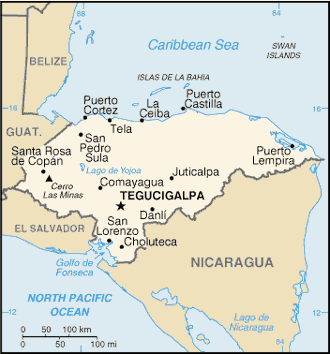
Eighteen people died and several others were wounded Tuesday in a shooting at a shoe factory in San Pedro Sula in northern Honduras, police said. The incident began at 3:45 p.m., when two men carrying AK-47 assault rifles burst into the factory and began shooting, said Chief Hector Ivan Mejia of the San Pedro Sula Police Department. By the time police arrived a few minutes later, 13 people were dead in the building. Five others died at a hospital, he said. The victims were in their teens and 20s, he said. Efforts were under way Tuesday night to identify the bodies, which were being placed into yellow plastic body bags.

Mejia said he did not know the motive for the shootings and that no one had been arrested. "We will not rest until capturing the persons responsible," he said. The approximately 2,000-square-foot factory is located in a suburb in southeast San Pedro Sula, which is the industrial capital of Honduras. The factory is in a primarily residential area reputed to be under the control of the notorious Mara 18, a ruthless street gang with links throughout Central America and the west coast of the United States, Mejia said. Mejia noted that drug traffickers have proliferated in the area in recent years, but said police had no reason to believe that the shooting was drug-related.


Tuesday, September 7, 2010

6.3-magnitude quake strikes Fiji Islands

earthquake struck the Fiji Islands
A 6.3 magnitude earthquake struck the Fiji Islands, Wednesday at 4:13 a.m. (12:13 p.m. ET Tuesday), the U.S. Geological Survey reported. The earthquake struck 100 miles from the city of Labasa on the island of Vanua Levu and roughly 220 miles from the capital of Fiji, Suva, located on the Island of Viti Levu.

The Labasa Police station reported a minute of mild shaking with no immediate reports of damage, said Chief Officer Patemosi Wate of the Police Command Center in the Northern Region of the Fiji Islands. No tsunami bulletin was issued by the Pacific Tsunami Warning Center.

Authorities say 1,000 homes evacuated in Colorado wildfire; unknown number destroyed

Sept. 6: Spectators watch as a fire burns in 4-Mile Canyon near Boulder, Colo.
A wind-driven wildfire in the rugged Colorado
foothills spread across 5 1/2 square miles Monday, destroying an unknown number of homes and triggering the evacuation of 1,000 others, authorities said. No injuries have been reported. Authorities didn't immediately know how many structures burned down. But at least some were houses, including four that belonged to firefighters battling the blaze, said Laura McConnell, a spokeswoman for the fire management team. Video from KUSA-TV showed at least one home engulfed in flames. The fire started Monday morning in Four Mile Canyon northwest of Boulder, and erratic winds gusting to 45 mph spread the flames quickly, sometimes in two directions at once.  About 100 firefighters were on the scene, and the winds calmed enough by late afternoon that three aerial tankers could start dropping fire retardant before darkness.

Some crews remained at the fire through the night. Four more aerial tankers were requested to join the fight Tuesday morning. At least a half-dozen roads in the area were closed, and a billowing, white plume of heavy smoke was visible for miles before sunset. County health officials advised residents to stay indoors if the smoky air became irritating. The fire's cause was unknown. Officials said it was too early to say how much, if any, of the fire was contained. Boulder County sheriff's Cmdr. Rick Brough said the fire moved quickly through difficult country. "It's very rocky, hilly, mountainous terrain," he said. One fire vehicle was destroyed in the blaze. The Boulder County alert system malfunctioned for about two hours Monday afternoon, leaving authorities unable to send automatic calls telling residents to evacuate. Officials said it began working again later. The Red Cross set up an overnight evacuation center at the Coors Events Center on the University of Colorado campus in Boulder. A shelter for livestock was set up at the Boulder County Fairgrounds in Longmont.

Monday, September 6, 2010

Congo boat safety questioned as 2 unrelated boat capsizes leave 70 dead, 200 feared dead

leaving 70 people dead and 200 others feared dead

Two boats capsized over the weekend in separate incidents on Congo's vast rivers, leaving 70 people dead and 200 others feared dead, and both vessels were heavily loaded and operating with few safety measures, officials said Sunday. Early on Saturday, a boat on a river in northwest Equateur Province hit a rock and capsized, provincial spokeswoman Ebale Engumba said Sunday. She said more than 70 people are believed dead among 100 estimated passengers. She said officials are investigating why the boat was traveling through the darkness without a light. In a separate incident in Kasai Occidental Province, 200 people were feared dead after a boat loaded with passengers and fuel drums caught fire and capsized in southern Congo, a survivor survivor confirmed the account and said local fishermen refused to help drowning passengers who jumped off the crowded boat. said Sunday. Another The incident in southern Congo would be the deadliest boat accident in the Central African nation this year, and among the worst in Africa this year.

The boats that traverse Congo's rivers are often in poor repair and filled beyond capacity. The industry is not well-regulated and boat operators are known to fill boats to dangerous levels. In the first incident in northwest Congo, Engumba said officials think the boat's lack of lighting was responsible. "We are going to arrest people involved who are in charge of regulating the boat's movement who failed to stop that boat from traveling at night," she said. In the second incident, survivors said the boat was overloaded with people and goods. A local official said two of the boat's crew were arrested but both refused to say how many people were aboard. The official said the passenger manifest apparently vanished in the fire.Fabrice Muamba, who said he was on the boat when it caught fire Saturday night on the Kasai River, said he thought only 15 of the more than 200 people he thought were aboard were able to swim to safety. He said passengers began to jump overboard when the engine caught fire as it passed the remote village of Mbendayi, some 45 miles (70 kilometers) from the town of Tshikapa, which is north of Congo's border with Angola.

Another survivor, a woman named Romaine Mishondo, said the boat was already packed with "hundreds" of passengers when it stopped some 10 minutes before the fire to pick up more people. She said she did not know exactly how many people were aboard, but said the boat was so crowded it reminded her of "a whole market in the village full of people." But when the fire started and people began jumping overboard, she said nearby fishermen ignored drowning passengers' pleas for help. "Fishermen attacked the boat and started beating passengers with paddles as they were (trying) to loot goods," she said. "The fishermen refused to save passengers, instead taking goods into their pirogues. ... I survived because I hung onto a jerrycan until another vessel passed by the scene and rescued us." Boat owner Mwamba Mwati Nguma Leonard said a survivor and an employee called to tell him the boat caught fire when workers spilled fuel and ignited the engine.

"At the moment I am crying after learning my boat caught fire," Leonard said. "I was just told on phone that it was while seamen were putting fuel into the tank that an explosion occurred after the oil touched the vessel's battery." He said he has asked police to arrest the boat's managers as he believes they employed unskilled workers. But he said he had no further details because he was in Congo's capital, Kinshasa, some 500 miles (800 kilometers) from the scene, and because his employees on the scene did not answer his calls Sunday. "Since I am far away in Kinshasa, I cannot confirm at the moment the exactly what happened," he said. Leonard also confirmed Muamba's account that the boat was carrying many drums full of fuel on its journey through Kasai Occidental Province. Leonard said the boat also was carrying sacks of maize. He said he did not know how many people were aboard.

Francois Madila, an official from the navigation department in the province, said police arrested two crew members and are investigating the incident. Madila said the sailors have not said how many people were aboard and that the passenger list appeared to have disappeared in the fire. Other officials and witnesses in the remote area could not be reached for comment Sunday. The incident is the deadliest of several boating incidents reported this year in Congo. In July, officials said at least 80 people died when a boat ferrying about 200 passengers to Congo's capital capsized after hitting a rock. In May, dozens of people died when an overloaded canoe capsized on a river in eastern Congo. And last November, at least 90 people were killed after a logging boat sank on a lake in Congo. The timber-carrying vessel was not supposed to be carrying passengers. Congo is a vast country of jungles and huge rivers in Central Africa with little more than 300 miles (480 kilometers) of paved road. Many people prefer to take boats even if they do not know how to swim.